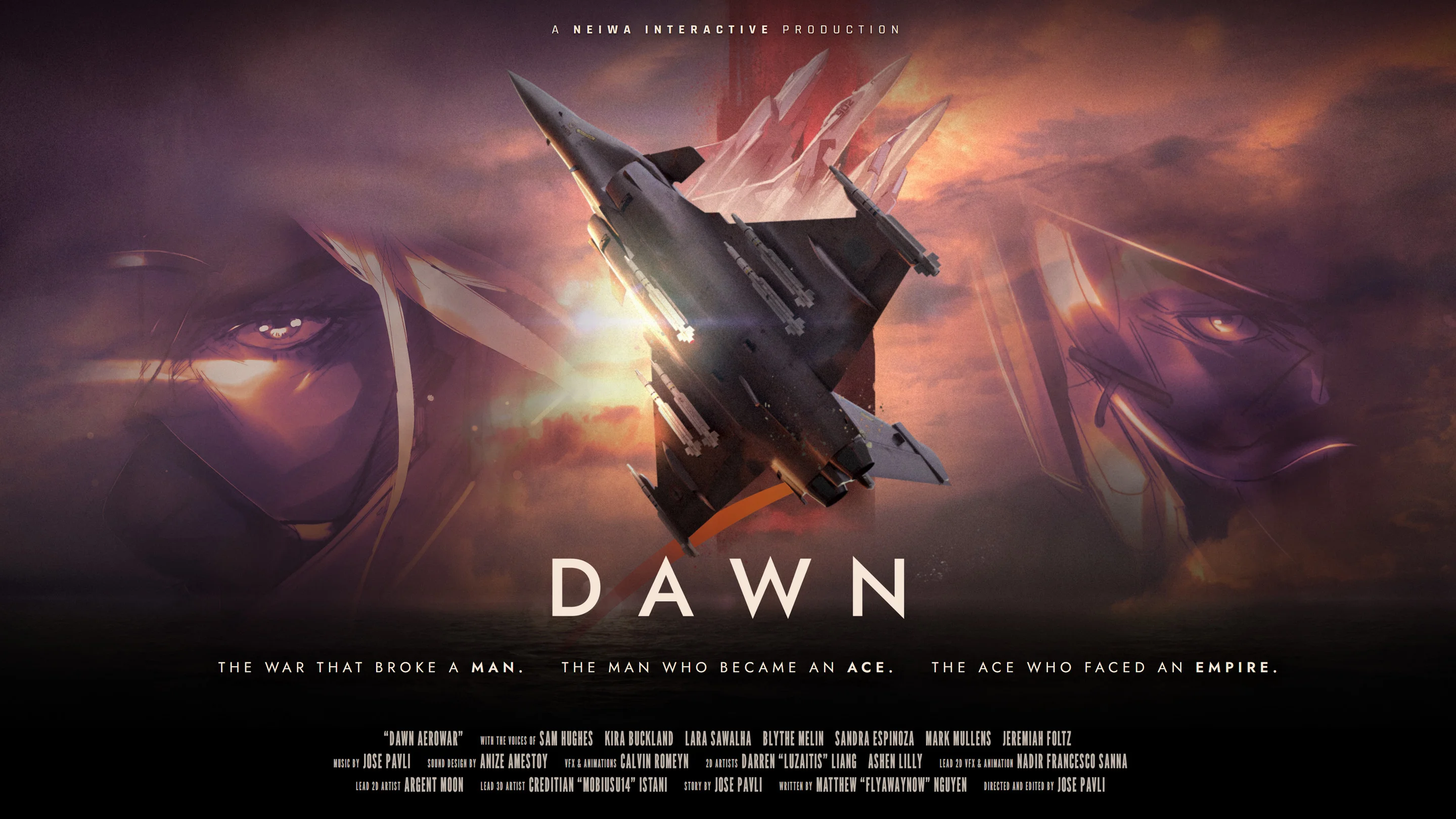
- Primary phrase: “Dawn Aerowar deadmens words have no meaning” is best treated as a lore interpretation query.
- Core theme: The wording reflects wartime grief, silence, memory, and the cost of following orders.
- Canonical status: The phrase should not be presented as a confirmed episode title or official quotation.
- Best reading method: Compare dialogue, radio transmissions, missions, and character choices across the story.
Dawn Aerowar deadmens words have no meaning Explained
The phrase Dawn Aerowar deadmens words have no meaning appears to describe a theme rather than a confirmed character, mission, or episode name. The most useful interpretation connects “dead men’s words” with the uncertainty of wartime communication: messages arrive late, orders become detached from their human cost, and the people who could explain the truth may no longer be alive.
Dawn Aerowar is structured as an interactive animated war story built around a final mission, voice acting, aerial conflict, and chapter-based viewing. That format makes the phrase especially suitable for a lore discussion. Viewers are encouraged to consider not only what characters say, but also what remains unsaid between radio transmissions, combat scenes, and major decisions.
The wording also carries an important distinction. It does not necessarily mean that every message from the dead is literally false. Instead, it can suggest that words lose their authority when separated from context. A final transmission may be sincere, but later characters may misunderstand it. An order may have been justified at the time, yet appear meaningless after the people it was meant to protect are gone.
| Phrase element | Likely thematic meaning | How to read it |
|---|---|---|
| “Dead men” | Fallen pilots, soldiers, or lost witnesses | Focus on people whose perspective can no longer develop |
| “Words” | Orders, radio messages, promises, and testimony | Examine who spoke, to whom, and under what pressure |
| “Have no meaning” | Loss of context, trust, or emotional force | Ask whether the message failed or the world changed |
| “Dawn Aerowar” | The story’s aerial war setting | Connect the idea to missions, pilots, and wartime memory |
Read the phrase as a question about memory and responsibility, not as proof that every wartime message is deliberately deceptive.
Silence
Missing voices create uncertainty. What cannot be confirmed may shape the decisions of the living.
Orders
Military commands can preserve structure while hiding the personal consequences of each mission.
Memory
Survivors interpret the past through incomplete reports, emotional trauma, and changing loyalties.
Meaning
A message can remain factually accurate while losing its original purpose or emotional power.
How the Phrase Fits the Story Structure
The story follows Zodiac 1 through a decisive operation near the end of a major conflict. Its route moves through the Northern Front, the Strait, the Aegis Sea, and toward the capital. This progression gives the phrase a natural narrative function: every new location can change how earlier statements are understood.
A message spoken at the beginning of the operation may sound like a clear command. Later, the same message may appear incomplete because the strategic situation has changed. The further Zodiac 1 travels, the more the mission can be read as an encounter with accumulated consequences rather than a simple route from one objective to another.
The chapter-based structure also supports multiple readings. Viewers can follow the animated feature in sequence, revisit individual episodes, or use the map interface to return to important sections. When investigating the phrase, revisiting earlier chapters after reaching later events can reveal how the meaning of a transmission changes over time.
| Story location | Interpretive question | Narrative function |
|---|---|---|
| Northern Front | What is Zodiac 1 told at the beginning? | Establishes the official mission and immediate stakes |
| The Strait | Which assumptions begin to break down? | Introduces uncertainty and changing pressure |
| Aegis Sea | Who benefits from the mission continuing? | Broadens the conflict beyond one pilot |
| The capital | What remains after the final operation? | Tests whether the original words still matter |
The phrase works best when connected to the full journey. Avoid assigning its meaning to one location without considering the mission’s wider progression.
Record the First Message
Note the earliest major order, briefing, or radio exchange connected to Zodiac 1. Write down its stated goal without adding later assumptions.
Track Changes in Context
Compare the original objective with what happens at the Northern Front, the Strait, and the Aegis Sea. Mark any point where the mission’s purpose appears to shift.
Compare Living and Lost Perspectives
Ask which characters are present to explain events and which voices are missing. Absence can be as important as spoken dialogue.
Revisit the Capital Sequence
Consider whether the final stage confirms the original message, rejects it, or leaves its meaning intentionally unresolved.
Separate Fact from Interpretation
Label confirmed events separately from thematic conclusions. This keeps the lore discussion useful without turning speculation into canon.
Characters and the Meaning of Lost Words
The central conflict places Zodiac 1 against an opposing group that includes Imperial ace pilots Reaper, Freya, and Miracle. Their presence gives the phrase a character-focused interpretation. “Dead men’s words” can refer not only to fallen soldiers, but also to reputations, legends, and stories created around pilots who are no longer able to correct them.
The three Imperial aces can be read as more than combat obstacles. They represent the way wartime identities become simplified. A pilot may be remembered as a hero, villain, monster, or symbol, while the individual behind that label disappears. In this reading, the “meaningless” words are not necessarily empty; they are words that have been reduced to propaganda, callsigns, or battlefield rumors.
| Character focus | Possible relationship to the phrase | Safe interpretation |
|---|---|---|
| Zodiac 1 | A living pilot carrying the weight of a final mission | Focus on action, duty, and personal responsibility |
| Reaper | A feared Imperial ace whose reputation may precede the person | Treat the title as an identity shaped by conflict |
| Freya | An opposing ace connected to the wider pilot conflict | Examine how loyalty and reputation affect perception |
| Miracle | Another Imperial ace within the enemy lineup | Consider how legends simplify complex individuals |
The Living Witness
Zodiac 1 can act as a witness to events that others may later misunderstand or reinterpret.
The Battlefield Legend
Ace pilots may become symbols whose public image no longer matches their private motives.
The Missing Testimony
When a character cannot speak again, surviving characters control the story told about them.
Do not state that Reaper, Freya, or Miracle definitely spoke the phrase unless an official script, episode, or character scene confirms it.
The strongest lore analysis therefore avoids claiming a single hidden answer. Instead, compare what the characters do with what the war says about them. If a pilot’s title is repeated more often than their personal name, the story may be showing how institutions replace individuality with military identity.
A Practical Lore-Reading Checklist
Use the following checklist when analyzing the phrase across Dawn Aerowar’s episodes. It is designed for both first-time viewers and readers building a detailed fan wiki entry.
Phrase Analysis Checklist:
- Record the exact wording of important radio transmissions
- Separate confirmed dialogue from personal interpretation
- Compare mission orders with the consequences shown later
- Track which characters are absent, lost, or unable to respond
- Revisit earlier chapters after completing the final mission
A useful lore page should also identify the difference between a quotation, a search phrase, and a theme. A quotation requires verified wording and a speaker. A search phrase reflects what readers are trying to understand. A theme is a recurring idea supported by several scenes. The “deadmens words have no meaning” wording is safest when presented in the second and third categories unless an official script confirms it as dialogue.
| Evidence type | What it can establish | What it cannot establish |
|---|---|---|
| Confirmed dialogue | A character said a specific line | The line explains the entire story |
| Mission objective | The official purpose of an operation | The objective is morally correct |
| Character title | How a pilot is identified publicly | The title reveals private motives |
| Visual scene | Mood, setting, or symbolic emphasis | A definitive hidden explanation |
| Repeated theme | A pattern across multiple chapters | A single canonical quotation |
Use clear labels such as “confirmed,” “implied,” and “interpretive” so readers can distinguish established lore from analysis.
For current production and release details, consult the official Dawn Aerowar website and the official Steam page. The project is planned for Windows through Steam on November 10, 2026, so story details may be expanded or clarified through future official updates.
What the Phrase Ultimately Means
The most balanced reading is that “dead men’s words have no meaning” describes the breakdown of communication after loss. Once a speaker is gone, their words can be quoted, weaponized, misunderstood, or forgotten. The sentence does not have to claim that the dead were dishonest. It can instead emphasize that meaning depends on living context: intention, relationships, consequences, and the ability to answer questions.
This interpretation matches Dawn Aerowar’s focus on a final operation and a war shaped by pilots, radio exchanges, and competing loyalties. The phrase becomes a warning against accepting official narratives without examining who created them and who paid the price.
| Reading | Main idea | Strength |
|---|---|---|
| Literal | The dead cannot clarify what they meant | Strong for scenes involving missing testimony |
| Military | Orders lose meaning when objectives outlive people | Strong for mission and command analysis |
| Emotional | Grief makes familiar words feel empty | Strong for character-focused interpretation |
| Political | Institutions reshape the words of the fallen | Useful for faction and propaganda analysis |
The phrase is most powerful when left partly unresolved. Its tension comes from the gap between what was said, what was intended, and what the survivors choose to believe.
Q: Is “deadmens words have no meaning” an official Dawn Aerowar quote?
It should not be treated as a confirmed official quote unless an episode, script, or official character source identifies the exact wording and speaker. For now, use it as a thematic search phrase or interpretive topic.
Q: What does the phrase mean in Dawn Aerowar lore?
It can represent the loss of context after death. Orders, promises, and radio messages may remain, but the people who created them can no longer explain their intentions.
Q: How does Zodiac 1 connect to this interpretation?
Zodiac 1 is placed at the center of a final mission that crosses several war zones. That position makes the character a living witness to messages, decisions, and consequences that may later be misunderstood.
Q: Should this phrase be listed as an episode title?
No. Unless official episode information confirms the title, list it as a lore topic, quote investigation, or thematic interpretation rather than a chapter name.