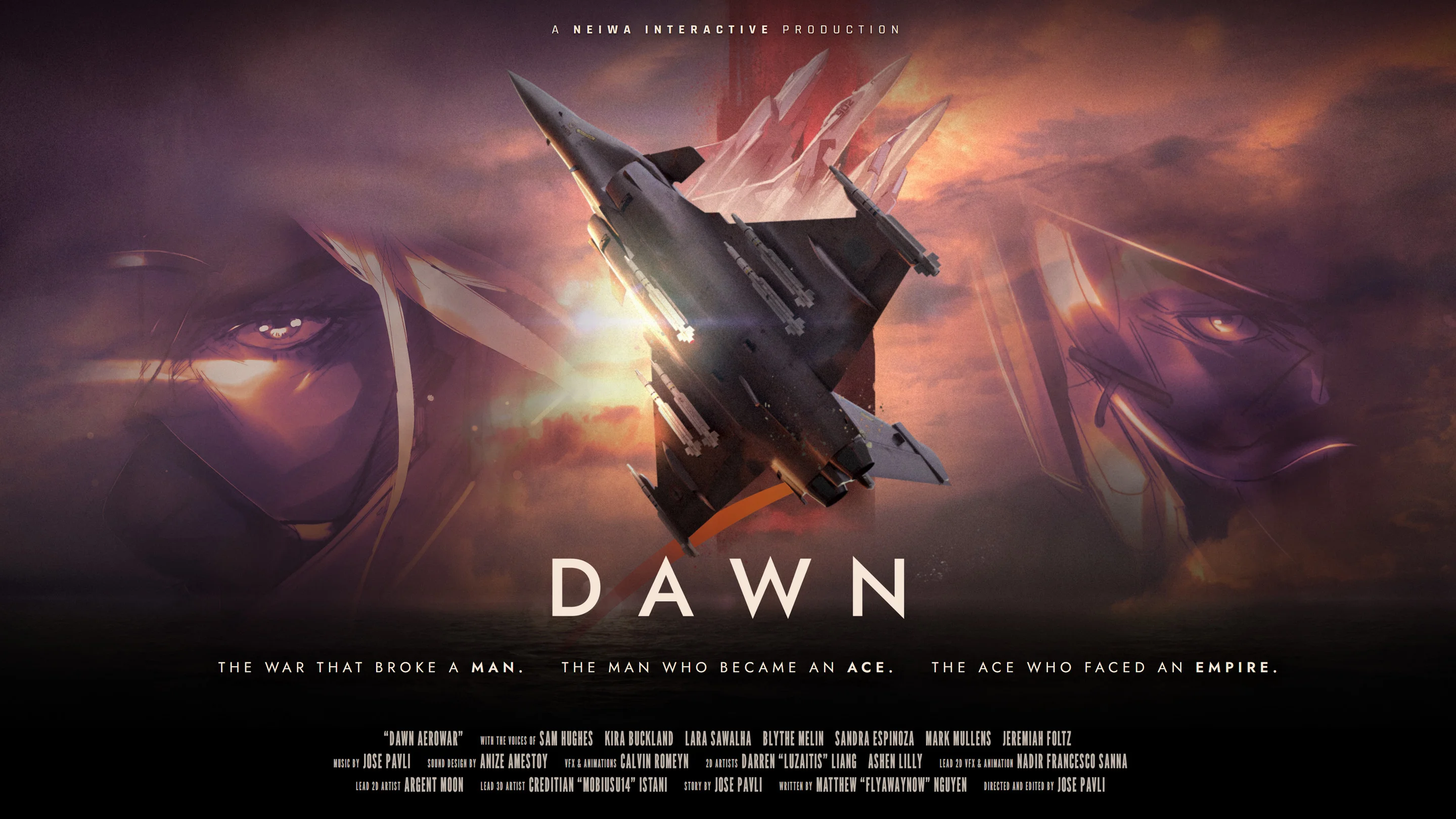
- Dawn Aerowar original soundtrack contains approximately 34 tracks and 90 minutes of music.
- Composer: Jose Pavli, whose score supports the project’s cinematic war-story presentation.
- Musical identity: Orchestral writing, choral color, aviation tension, and dramatic narrative transitions.
- Best listening approach: Follow the story structure instead of treating the score like a conventional battle-game playlist.
- Availability: Check the official Dawn Aerowar website and Steam page for soundtrack announcements and release updates.
Dawn Aerowar Original Soundtrack Overview
The Dawn Aerowar original soundtrack is built for an interactive animated war film rather than a traditional flight simulator. The music supports nearly two hours of animated storytelling across 12 episodes, combining aerial action, radio-driven tension, character moments, and large-scale wartime drama.
The official project information credits Jose Pavli with the original music. The published soundtrack description lists approximately 90 minutes of music across 34 tracks, giving the score a substantial role in the overall presentation. It is not simply background audio for aircraft scenes; it helps connect the film’s different locations, missions, pilots, and emotional turns.
| Soundtrack Detail | Confirmed Information |
|---|---|
| Composer | Jose Pavli |
| Track count | Approximately 34 tracks |
| Total music length | Approximately 90 minutes |
| Story structure | 12 episodes |
| Main presentation | Interactive animated war story |
| Musical emphasis | Orchestral and choral cinematic scoring |
The score is best understood as part of Dawn Aerowar’s combined visual and audio design. The project uses 3D animation for aircraft and environments, 2D artwork for character presentation, full voice acting, radio communication, and interactive chapter selection. Music must therefore shift between action, suspense, atmosphere, and character-focused scenes.
Aerial Action
The score reinforces aircraft movement, combat pressure, formations, and the scale of wartime operations.
War Drama
Orchestral writing gives the story a serious tone and supports the conflict between opposing nations and pilots.
Character Focus
Musical changes help separate pilot-centered scenes from larger battlefield sequences.
Interactive Structure
The soundtrack works across episodes, cinematic viewing, chapter selection, and map-based story navigation.
Treat the score as a narrative guide. Notice how musical intensity can change when the story moves from cockpit scenes to major battle theaters or emotional transitions.
Musical Style and Cinematic Themes
Dawn Aerowar’s soundtrack fits the project’s animated war-film identity. Its musical language is designed to complement cinematic editing, aircraft movement, illustrated character scenes, and the atmosphere of a final wartime mission.
The available project information identifies orchestral and choral elements as important parts of the music. That combination is well suited to a story that moves between personal sacrifice and large-scale conflict. Orchestral textures can provide momentum during flight sequences, while choral color can make major locations, military turning points, and dramatic reveals feel more expansive.
| Musical Function | Likely Story Use | Listening Focus |
|---|---|---|
| Action scoring | Aerial maneuvers and combat sequences | Tempo, percussion, rising intensity |
| Suspense scoring | Interceptions, radio warnings, and uncertain objectives | Repeated figures and restrained tension |
| Dramatic scoring | Mission decisions and wartime consequences | Brass weight, strings, and harmonic changes |
| Atmospheric scoring | Cockpit views, travel, and quiet transitions | Space, sustained tones, and pacing |
| Choral color | Major emotional or cinematic moments | Scale, solemnity, and emphasis |
The score also benefits from Dawn Aerowar’s contrast between 3D aircraft animation and 2D character artwork. A large aerial sequence may need a broad, energetic sound, while a close character scene can rely on more restrained musical support. This contrast helps prevent the soundtrack from becoming a continuous wall of action music.
The story follows Zodiac 1 through a decisive operation that crosses the Northern Front, the Strait, the Aegis Sea, and the capital. These settings create natural opportunities for changes in musical tone. A route through different theaters of war can feel more coherent when each stage has a distinct sense of scale, danger, or emotional weight.
The soundtrack’s strongest identity comes from contrast: intimate pilot moments, tense military communication, and expansive aerial drama belong to the same musical world.
Story Route and Soundtrack Progression
Because Dawn Aerowar is divided into 12 episodes, the original soundtrack can be approached as a progression rather than a loose collection of action cues. The exact track names and episode-to-track assignments should be confirmed through official soundtrack materials, but the story route provides a useful framework for listening.
Establish the Final Mission
Begin with the opening material and identify how the score introduces Zodiac 1, the wartime setting, and the importance of the final operation. Early music should establish the emotional stakes before the larger action begins.
Follow the Northern Front
Pay attention to the first major military atmosphere. This section of the journey establishes the conflict’s scale and can be heard as the transition from personal mission briefing to active wartime pressure.
Move Through the Strait
Use the middle portion of the story to compare tension and momentum. The music can help make the route feel more dangerous as the mission passes through a constrained and strategically important area.
Cross the Aegis Sea
Listen for broader cinematic pacing during the sea-crossing section. Open geography and extended flight sequences create room for sustained orchestral development and larger musical statements.
Approach the Capital
The final stage should be heard as a convergence of mission pressure, character stakes, and wartime consequences. Compare the closing material with the score’s opening atmosphere.
| Story Stage | Narrative Focus | Soundtrack Role |
|---|---|---|
| Mission opening | Zodiac 1 and the central operation | Establishes tone and stakes |
| Northern Front | Active war zone and military urgency | Builds momentum and pressure |
| Strait | Strategic passage and confrontation | Tightens suspense |
| Aegis Sea | Extended route and aerial scale | Expands cinematic atmosphere |
| Capital | Final approach and consequences | Brings major themes toward resolution |
This listening route also works well with the interactive viewing format. Viewers can use cinematic mode, select episodes, and revisit chapters through the map interface. That structure encourages comparison: return to an earlier episode after hearing the full story, then notice how its music foreshadows later events or establishes a character’s importance.
The route follows the project’s publicly described locations and mission structure. For a spoiler-light experience, listen in episode order and avoid jumping directly to the final chapters.
How to Listen to the Original Score
A soundtrack centered on animation, voice acting, radio transmissions, and aircraft scenes benefits from careful listening. The best setup depends on whether the goal is to study the music, experience the film, or compare the score with the visual presentation.
Film-First Listening
Watch the episodes in order with the original voice performances and sound effects. This approach shows how music interacts with dialogue, aircraft movement, and editing.
Score-First Listening
Listen to the music separately when you want to focus on orchestration, recurring moods, transitions, and the overall 90-minute structure.
Comparison Listening
Revisit selected chapters after completing the story. Compare quiet cockpit scenes with major aerial sequences to identify shifts in musical scale.
| Listening Goal | Recommended Method | What to Notice |
|---|---|---|
| Understand the story | Watch in episode order | Music, dialogue, radio calls, and scene transitions |
| Study the composition | Listen without visual distractions | Instrument layers, pacing, and recurring moods |
| Compare character scenes | Revisit selected chapters | Changes in intensity and emotional focus |
| Explore the world | Use the chapter map | How locations affect atmosphere and pacing |
Use headphones or a balanced speaker setup if available, but avoid assuming that louder playback creates a better experience. The soundtrack shares space with dialogue and sound effects, so moderate volume can make the full audio design easier to follow.
A useful approach is to make three short notes after each viewing session:
- Which musical moment best defined the episode?
- Did the score emphasize action, suspense, atmosphere, or character emotion?
- Did the music change how the location or mission objective felt?
These questions keep the focus on the score without inventing unsupported track titles or assigning themes that have not been officially documented.
For the clearest first experience, use the original English voice acting, follow the 12-episode order, and evaluate the music together with the film’s visual editing.
Soundtrack Reference Checklist and FAQ
Use this checklist when organizing a Dawn Aerowar soundtrack article, listening session, or future track database.
Soundtrack Research Checklist:
- Confirm the official composer and soundtrack credit
- Record the published track count and approximate runtime
- Separate confirmed track names from descriptive musical observations
- Match episode references to official soundtrack information when available
- Check the official website and Steam page for 2026 updates
| Reference Item | Current Status |
|---|---|
| Composer | Jose Pavli |
| Published track count | Approximately 34 |
| Published runtime | Approximately 90 minutes |
| Episode count | 12 |
| Official project format | Interactive animated war story |
| Release information | Planned Windows Steam release on November 10, 2026 |
For future updates, use the official Dawn Aerowar website as the primary reference. The official Steam page is also useful for release information, product details, and announcements connected to the Windows version.
Q: Who composed the Dawn Aerowar original soundtrack?
The original music is credited to Jose Pavli. The score supports the project’s animated war-film presentation with cinematic orchestral and choral elements.
Q: How many tracks are in the Dawn Aerowar soundtrack?
Official project information lists approximately 34 original soundtrack tracks. Track names and final ordering should be checked against future official releases.
Q: How long is the Dawn Aerowar original soundtrack?
The published soundtrack information describes approximately 90 minutes of music. This is separate from the nearly two-hour runtime of the full 12-episode animated story.
Q: Is Dawn Aerowar a traditional flight game?
No. Dawn Aerowar is more accurately described as an interactive animated war story or animated audioplay. Its interaction focuses on cinematic viewing, episode selection, and chapter navigation rather than conventional flight combat systems.
Keep the soundtrack page focused on confirmed credits, runtime, track count, and official announcements. Avoid publishing unverified track titles or invented theme assignments.