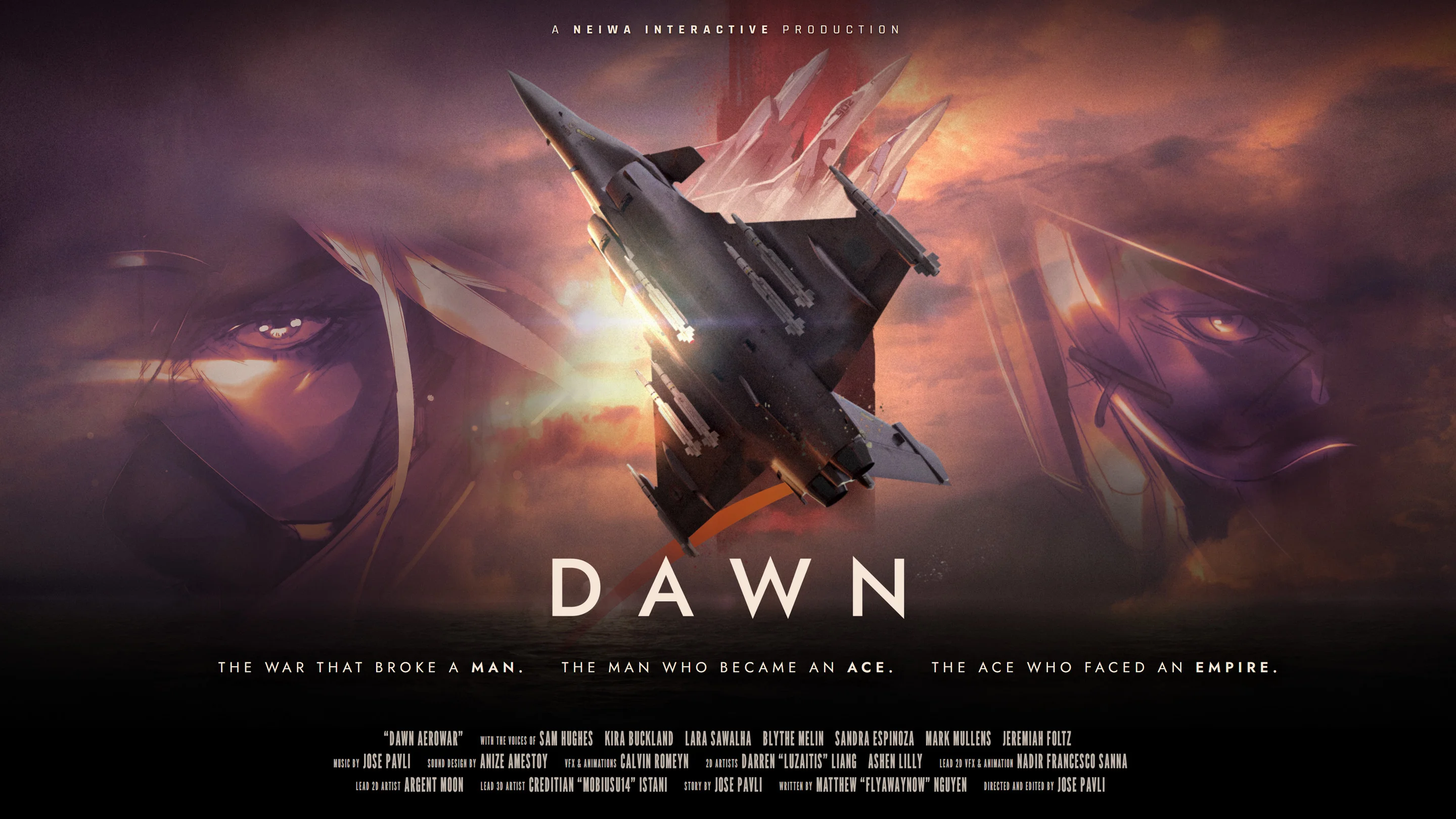
- Dawn Aerowar kickstarter trailer analysis focuses on presentation, story structure, and production context.
- Format: An interactive animated war story rather than a traditional flight simulator.
- Visual identity: 3D aircraft and environments are paired with 2D character artwork.
- Narrative frame: Zodiac 1 follows a final mission across several wartime locations.
- Release status: The Windows Steam release is planned for November 10, 2026.
Dawn Aerowar Kickstarter Trailer Analysis: What It Presents
Dawn Aerowar kickstarter trailer analysis is most useful when the project is viewed as an interactive animated film instead of a conventional flight game. The available project information describes nearly two hours of content divided into 12 episodes, with English voice acting, cinematic scenes, 3D animation, and 2D artwork.
The trailer-facing identity centers on atmosphere and storytelling. Aircraft movement, cockpit viewpoints, large-scale aerial scenes, and illustrated character moments work together to establish a war narrative. This combination gives the project a presentation style closer to an animated war film with interactive navigation than to a mission-based simulator.
Video Highlights:
- The project combines 3D aerial animation with 2D hand-drawn character presentation.
- Cockpit scenes emphasize the pilot’s perspective and the atmosphere of flight.
- Cinematic framing supports the story rather than showcasing a traditional combat system.
- The project is structured around episodes, chapters, and interactive viewing options.
Treat the trailer as a presentation of Dawn Aerowar’s tone, visual language, and story format. It should not be used as evidence of systems that the official project information does not confirm, such as aircraft customization, leveling, or competitive multiplayer.
3D Aircraft
Aircraft, environments, and aerial action are presented through three-dimensional animation.
2D Characters
Hand-drawn character art creates a visual contrast with the aircraft and wartime environments.
Cockpit Focus
Interior viewpoints place attention on pilots, instruments, radio communication, and mission tension.
Film-Like Editing
Composed shots and dramatic transitions support an animated feature presentation.
| Trailer Element | Narrative Function | What to Watch For |
|---|---|---|
| Aircraft sequences | Establishes the scale of the conflict | Formation movement, aerial routes, and battlefield atmosphere |
| Cockpit scenes | Grounds the story in the pilot’s experience | Instruments, radio exchanges, and character reactions |
| 2D character art | Gives the cast a distinct visual identity | Expressions, introductions, and opposing pilot presentation |
| Cinematic transitions | Connects action with story beats | Changes in location, mission stakes, and episode structure |
The strongest takeaway is that Dawn Aerowar’s trailer material communicates tone and format first. It presents a world shaped by war, pilots, military pressure, and a final operation. The project’s appeal depends on how well those elements combine into a coherent animated experience.
Story Structure and the Trailer’s Geographic Progression
The central story follows Zodiac 1 during a decisive final mission near the end of a major conflict. The route moves through the Northern Front, the Strait, the Aegis Sea, and the capital. This progression gives the story a clear geographic shape and helps the audience understand how the operation expands from a localized military situation into a larger national crisis.
The setting also establishes a useful contrast between mission objectives and personal stakes. Zodiac 1 is connected to a dangerous operation involving the protection of a mysterious weapon, while the wider conflict includes the Free Nations and the Saal’Runa Empire. The trailer’s military imagery therefore supports more than spectacle; it frames the journey as part of a larger war and revenge narrative.
The confirmed structure includes 12 episodes and nearly two hours of content. Use the episode format to organize future lore and story pages, but avoid inventing episode titles or unconfirmed plot events.
Establish the Final Mission
Begin with Zodiac 1 and the operation that drives the narrative. The final-mission framing gives the story urgency from the opening premise.
Move Through the Northern Front
The Northern Front introduces the wartime environment and establishes the scale of the aerial conflict.
Cross the Strait and Aegis Sea
The route expands through the Strait and across the Aegis Sea, creating a sense of movement between major theaters of war.
Advance Toward the Capital
The campaign moves toward the capital, bringing the military route closer to the story’s final stage.
Organize the Experience into Episodes
The complete presentation is divided into 12 episodes, allowing the story to be explored as a sequence rather than one uninterrupted block.
| Story Location | Role in the Journey | Editorial Focus |
|---|---|---|
| Northern Front | Opening theater of the operation | War conditions and mission setup |
| Strait | Transitional combat zone | Movement between fronts and rising pressure |
| Aegis Sea | Expanded aerial theater | Scale, distance, and operational danger |
| Capital | Destination of the campaign | Final-stage tension and story resolution |
For wiki coverage, keep the route and the episode structure separate. An Episodes page should track chapter order and summaries, while a Story page should explain the war, the mission, the factions, and the narrative meaning of the journey.
Characters, Aces, and Conflict Analysis
The trailer presentation is built around pilots and the opposing forces connected to them. Zodiac 1 functions as the central pilot and mission unit, while Reaper, Freya, and Miracle are presented as Imperial Ace pilots. Their positions create a clear opposition between the protagonist side and the Saal’Runa Empire.
This lineup is important because the project does not present the aerial conflict as anonymous aircraft movement alone. The named pilots provide recognizable faces for the war. Their titles and reputations can support character pages, relationship articles, and future episode analysis without requiring unsupported biographical details.
The current information confirms the main pilot lineup and faction relationships, but it does not establish complete biographies, exact aircraft specifications, or detailed personal histories. Keep character pages limited to verified roles until official material adds more context.
| Character | Confirmed Role | Faction or Position | Wiki Coverage Angle |
|---|---|---|---|
| Zodiac 1 | Central pilot and mission unit | Protagonist side | Final mission, route, and narrative perspective |
| Reaper | Imperial Ace pilot | Saal’Runa Empire | Rival pilot identity and opposition |
| Freya | Imperial Ace pilot | Saal’Runa Empire | Ace lineup and conflict relationship |
| Miracle | Imperial Ace pilot | Saal’Runa Empire | Imperial opposition and aerial reputation |
Zodiac 1
The narrative center of the final mission. Focus on the unit’s objective, route, and relationship to the wider war.
Imperial Aces
Reaper, Freya, and Miracle form the named opposing ace group connected to the aerial conflict.
Faction Conflict
The Free Nations and Saal’Runa Empire provide the broader political and military framework.
A useful character analysis should connect visual presentation with narrative function:
- Zodiac 1 represents the viewer’s route through the mission.
- Reaper, Freya, and Miracle represent the pressure created by elite Imperial opposition.
- The factions explain why the operation matters beyond one aircraft or one pilot.
- Radio communication and cockpit scenes can connect personal reactions to strategic events.
This approach avoids reducing the project to a list of pilots. Instead, it shows how character identity, faction alignment, and mission structure reinforce one another.
Interactive Viewing, Audio, and Presentation Choices
Dawn Aerowar’s interaction is designed primarily around viewing and navigation. The project includes Cinematic mode, episode selection, and map-based chapter browsing. These features allow the audience to choose how to experience the animated story without implying a traditional combat, equipment, or character-progression loop.
This distinction matters for SEO and wiki organization. Searchers may use terms such as “gameplay,” “controls,” or “trailer,” but the most accurate explanation is that interaction supports chapter access and cinematic viewing. Keyboard and mouse controls as well as gamepad support are associated with navigation and interactive viewing.
Start with Cinematic mode when you want the most film-like presentation. Use episode or map selection when you want to study a particular chapter, location, or story segment.
| Feature | Purpose | Best Use |
|---|---|---|
| Cinematic mode | Presents the story as a guided animated experience | First viewing and atmosphere |
| Episode selection | Opens a specific part of the 12-episode structure | Reviewing chapter order |
| Map navigation | Connects chapters with the wider mission route | Studying locations and progression |
| Keyboard and mouse | Supports navigation and viewing interaction | PC setup |
| Gamepad support | Provides an alternative control method | Controller-based viewing |
The audio design also supports the cinematic identity. English voice acting carries the original performances, while subtitles are listed for English, French, Italian, German, and Spanish. The original soundtrack is described as approximately 90 minutes across 34 tracks, with orchestral and choral elements contributing to the wartime tone.
| Presentation Area | Confirmed Details | Editorial Interpretation |
|---|---|---|
| Voice acting | English | Original character performances and radio delivery |
| Subtitles | English, French, Italian, German, Spanish | Accessibility for multiple audiences |
| Soundtrack | About 90 minutes, 34 tracks | Extended musical support for the film-like structure |
| Input | Keyboard, mouse, and gamepad support | Navigation rather than conventional flight simulation |
For a trailer analysis, sound should be treated as part of the project’s identity rather than background decoration. Voice performances establish character presence, radio communication reinforces military tension, and the soundtrack helps connect separate episodes into one continuous war story.
Kickstarter Context, Release Status, and Research Checklist
The project’s development history adds important context to its trailer presentation. Dawn Aerowar grew from a Kickstarter-backed production associated with the Dawn 5 campaign. The campaign received support from more than 600 backers, creating an early audience for the project’s continued production and public updates.
That funding context helps explain why the trailer emphasizes a distinctive production identity. The combination of 3D aerial sequences, 2D character art, full voice acting, original music, and chapter-based presentation is central to the project rather than an incidental feature.
The current plan lists a Windows Steam release for November 10, 2026. Check the official Dawn Aerowar website and the official Steam page for any schedule or feature updates before publishing time-sensitive claims.
Trailer Analysis Checklist:
- Identify whether a scene emphasizes story, character, or aerial scale
- Separate confirmed interactive viewing features from traditional game systems
- Track the Northern Front, Strait, Aegis Sea, and capital route
- Record character and faction relationships without adding unconfirmed biographies
- Verify the November 10, 2026 release status through official channels
| Development Area | Confirmed Information | Why It Matters |
|---|---|---|
| Funding origin | Kickstarter-backed production associated with Dawn 5 | Establishes the project’s community-supported background |
| Support base | More than 600 backers | Shows early audience engagement |
| Production identity | 3D animation, 2D art, voice acting, and original music | Explains the trailer’s mixed-media presentation |
| Planned release | November 10, 2026 | Provides the current release reference point |
| Distribution | Windows through Steam | Defines the announced platform scope |
When evaluating a trailer, use three editorial questions:
- What does the scene establish? Identify location, character, mission, or faction.
- How is the scene presented? Note the use of 3D aircraft, 2D artwork, cockpit framing, voice acting, or music.
- What is confirmed outside the scene? Compare the interpretation with official story, feature, and release information.
This method keeps the analysis useful without overstating what the trailer proves. It also creates a strong structure for future pages covering episodes, characters, lore, soundtrack, development updates, and release news.
Q: What is Dawn Aerowar?
Dawn Aerowar is an interactive animated war story combining 3D animation, 2D artwork, English voice acting, original music, and chapter-based viewing features.
Q: Is Dawn Aerowar a traditional flight simulator?
No. The project is presented as an animated feature with interactive viewing and navigation. Its confirmed features focus on Cinematic mode, episode selection, and map-based chapter browsing.
Q: What does the Kickstarter trailer emphasize?
The trailer presentation emphasizes cinematic aerial action, cockpit viewpoints, hand-drawn character art, military atmosphere, and the final mission of Zodiac 1.
Q: When is Dawn Aerowar planned to release?
The current plan lists November 10, 2026, for the Windows Steam release. Check the official website and Steam page for later updates.