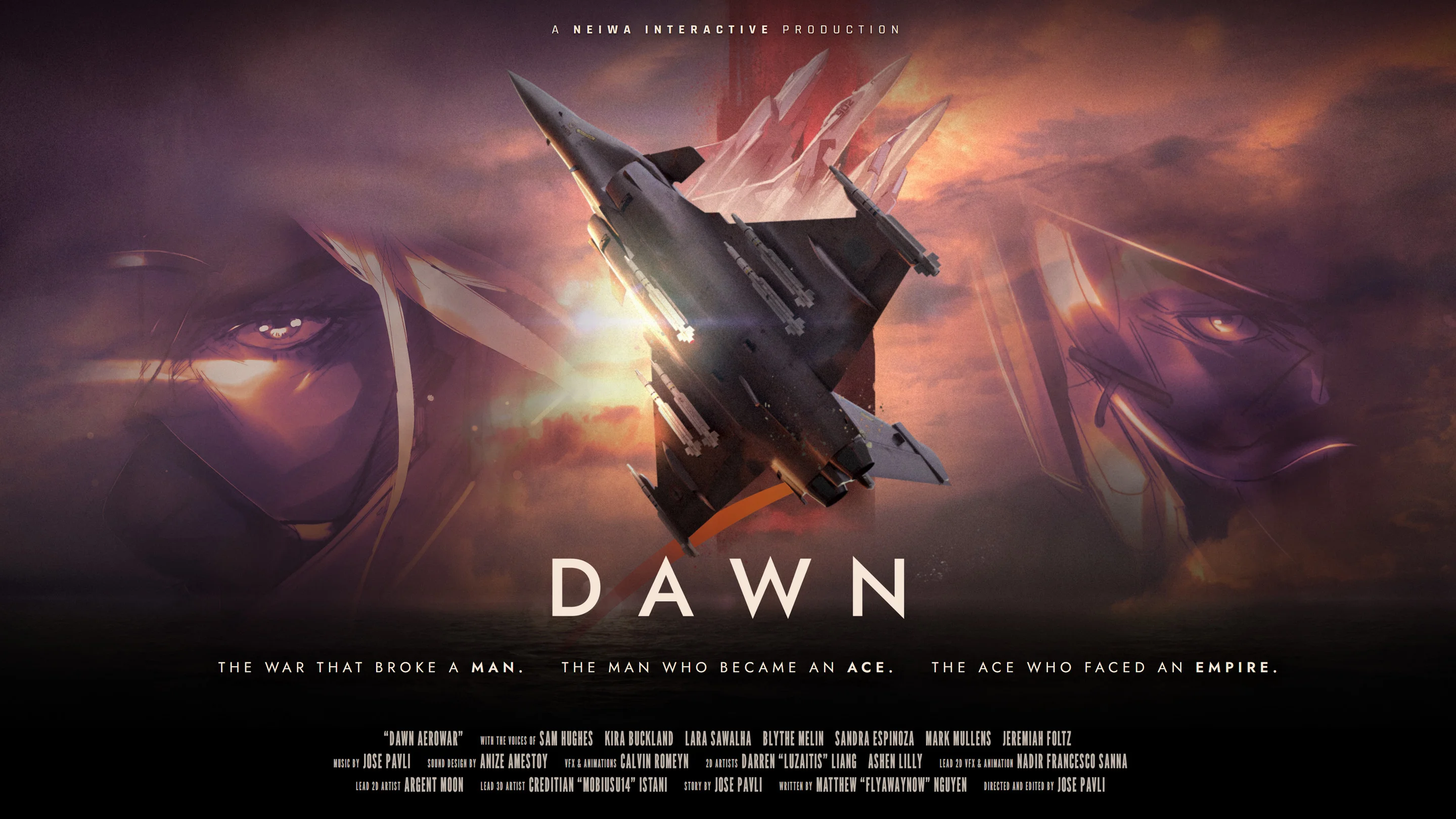
- Dawn Aerowar teaser 2 analysis focuses on visual storytelling rather than traditional combat gameplay.
- Core premise follows Zodiac 1 through a final mission during a major aerial war.
- Visual identity combines 3D aircraft animation, 2D character art, cockpit scenes, and cinematic editing.
- Story clues point toward the Northern Front, the Strait, Aegis Sea, and the capital.
- Release context lists 12 episodes, nearly two hours of content, and a planned November 10, 2026 launch.
Dawn Aerowar Teaser 2 Analysis: What It Establishes
Dawn Aerowar teaser 2 is best read as a preview of an interactive animated war story, not as a conventional flight simulator showcase. The project uses aerial action to frame a character-driven narrative about duty, conflict, and a decisive final mission.
The most important reading is tonal. Aircraft movement, radio communication, cockpit framing, and large-scale battle imagery are designed to establish pressure around the pilots. The teaser’s purpose is therefore less about explaining controls and more about defining the atmosphere viewers should expect from the finished work.
Aerial Scale
3D aircraft animation presents the war as a broad military conflict rather than a single isolated duel.
Character Focus
2D artwork and pilot presentation keep the emotional perspective connected to the cast.
Mission Pressure
The final-mission premise gives the teaser a clear sense of urgency and narrative direction.
Film Language
Framing, transitions, and cockpit viewpoints make the project feel closer to an animated feature.
| Teaser Element | Narrative Function | What to Watch For |
|---|---|---|
| Aircraft formations | Shows the scale of the conflict | Relative positioning, speed, and formation changes |
| Cockpit viewpoints | Places the audience with the pilots | Instruments, radio exchanges, and reaction shots |
| 2D character art | Separates personal drama from battlefield scale | Expressions, introductions, and character emphasis |
| War-zone imagery | Establishes the campaign’s geographic scope | Front lines, sea routes, and capital-bound movement |
Treat the aircraft as part of the storytelling language. The important question is not only who is flying, but what each flight reveals about the war and the people trapped inside it.
Visual Style and Cinematic Structure
The project’s visual identity comes from the contrast between three-dimensional flight sequences and two-dimensional character presentation. This combination can make the aerial action feel expansive while keeping conversations and emotional beats visually distinct.
A useful way to understand teaser 2 is to separate its presentation into four layers:
- Aircraft and environments: 3D animation gives the war its physical scale, including aircraft movement, sky battles, and changing locations.
- Pilot interiors: Cockpit scenes narrow the viewpoint and create intimacy through instruments, radio traffic, and confined spaces.
- Character artwork: 2D portraits and illustrated scenes give the pilots a recognizable dramatic identity.
- Editing rhythm: Cinematic cuts connect personal decisions with the larger military operation.
| Visual Layer | Strength | Likely Story Use |
|---|---|---|
| 3D aircraft | Motion and battlefield scale | Pursuits, formations, interceptions, and travel |
| 2D character art | Emotional clarity | Introductions, dialogue, memories, and relationships |
| Cockpit staging | Immediate tension | Orders, warnings, decisions, and uncertainty |
| Cinematic editing | Connects separate viewpoints | Parallel action and escalation between pilots |
Identify the Viewpoint
First determine whether a shot is presenting the pilot, the aircraft, or the wider battlefield. Each viewpoint carries a different storytelling role.
Track the Visual Contrast
Note when the presentation shifts between 3D flight imagery and 2D character art. These transitions likely separate action beats from emotional information.
Read the Camera Direction
Follow movement toward, away from, or across the battlefield. Direction can suggest pursuit, retreat, interception, or progress toward a major objective.
Connect Images to the Mission
Place each visual moment against the broader route from the Northern Front through the Strait and Aegis Sea toward the capital.
The hybrid art direction is not merely decorative. It helps Dawn Aerowar shift between military spectacle and personal drama without abandoning its animated-film identity.
Story Clues: Zodiac 1, the Empire, and the Final Mission
The central story follows Zodiac 1 during a decisive operation near the end of a major conflict. The mission connects the Northern Front, the Strait, Aegis Sea, and the capital, creating a route that can be read as both a military advance and a progression through escalating narrative stakes.
The opposing side includes three Imperial Ace pilots: Reaper, Freya, and Miracle. Their presence gives the teaser a recognizable rival structure. Rather than treating them as interchangeable enemies, the story framework presents them as a distinct ace lineup positioned against Zodiac 1.
| Story Element | Confirmed Role | Analysis Value |
|---|---|---|
| Zodiac 1 | Central pilot and mission unit | Anchors the audience’s journey through the war |
| Reaper | Imperial Ace pilot | Represents the elite opposition surrounding the mission |
| Freya | Imperial Ace pilot | Expands the rival pilot group beyond a single antagonist |
| Miracle | Imperial Ace pilot | Adds another named ace to the conflict’s opposing side |
| Saal’Runa Empire | Major opposing power | Defines the political and military pressure behind the war |
The route also gives the story a strong geographic structure. The Northern Front establishes the initial military situation. The Strait and Aegis Sea widen the operation into new theaters. The capital then becomes the destination that gives the mission its final-stage significance.
Northern Front
The opening theater establishes the pressure of the war and the starting point of Zodiac 1’s operation.
Aegis Sea
The sea route suggests a broader campaign involving movement, interception, and changing battlefield conditions.
The Capital
The final destination raises the stakes and connects the personal mission to the wider political conflict.
The available project information establishes the mission framework and named factions, but it does not confirm a full ending. Avoid presenting speculation about the final outcome as established lore.
Interactive Viewing, Episodes, and Release Context
Dawn Aerowar is planned as a chapter-based interactive viewing experience. Its interaction is centered on how the audience explores the animated story: selecting episodes, using a map, and choosing a cinematic presentation mode. This distinction matters because the project is not described as a progression-driven combat game.
The planned structure includes 12 episodes with nearly two hours of content. That format gives the teaser a useful role: it introduces the world, pilots, and visual language before the complete chapter sequence becomes available.
| Feature | Available Detail | Practical Meaning |
|---|---|---|
| Content structure | 12 episodes | The story is divided into selectable chapters |
| Runtime | Nearly 2 hours | The project is designed as a substantial animated work |
| Viewing mode | Cinematic mode | Supports a film-focused presentation |
| Navigation | Episode and map selection | Allows chapter browsing and revisiting |
| Input | Keyboard, mouse, and gamepad support | Supports flexible navigation on Windows PC |
| Voice and text | English voice acting with multiple subtitles | Separates original performance from localized text |
Teaser 2 Analysis Checklist:
- Separate action shots from character-focused scenes
- Track Zodiac 1 and the Imperial Ace lineup
- Map the route from the Northern Front to the capital
- Check how 3D and 2D art styles transition
- Compare the teaser tone with the 12-episode structure
The current release plan lists November 10, 2026 for Windows through Steam. Because the date is still upcoming as of October 26, 2026, viewers should treat official announcements as the best place to confirm changes.
Watch teaser 2 once for atmosphere, then review it again with the route, pilot lineup, and visual transitions in mind. The second pass usually reveals more narrative structure.
Key Takeaways and FAQ
The strongest interpretation of teaser 2 is that Dawn Aerowar is building a cinematic aerial war narrative around a final mission, not advertising a conventional upgrade loop or competitive flight system. Its identity depends on how aircraft scale, pilot emotion, war geography, and music work together.
The original soundtrack is planned as a major part of that identity, with approximately 90 minutes of music across 34 tracks. The combination of orchestral writing, choral color, radio communication, and cockpit sound should reinforce the contrast between massive battles and individual decisions.
| Analysis Focus | Main Conclusion | Confidence |
|---|---|---|
| Genre identity | Interactive animated war film with chapter-based viewing | High |
| Visual direction | 3D aircraft and environments paired with 2D character art | High |
| Main conflict | Zodiac 1 opposed by Imperial forces and named ace pilots | High |
| Narrative route | Northern Front, Strait, Aegis Sea, then the capital | High |
| Ending interpretation | Requires further official story information | Limited |
Use teaser 2 as a visual and thematic guide. It establishes the world, mission pressure, and presentation style, while the full 12-episode work will provide the complete narrative context.
Q: What is the main point of Dawn Aerowar teaser 2 analysis?
The teaser presents Dawn Aerowar as an interactive animated war story built around cinematic aerial action, pilot drama, and a decisive final mission.
Q: Who is the central pilot in Dawn Aerowar?
Zodiac 1 is the central pilot and mission unit. The story places Zodiac 1 against Imperial forces and the ace pilots Reaper, Freya, and Miracle.
Q: Is Dawn Aerowar a traditional flight simulator?
No. Its documented format emphasizes animated storytelling, episode selection, map navigation, cinematic viewing, voice acting, and interactive presentation rather than conventional flight-simulation progression.
Q: When is Dawn Aerowar planned to release?
The current plan lists November 10, 2026, on Windows through Steam. The date remains subject to official development updates.